
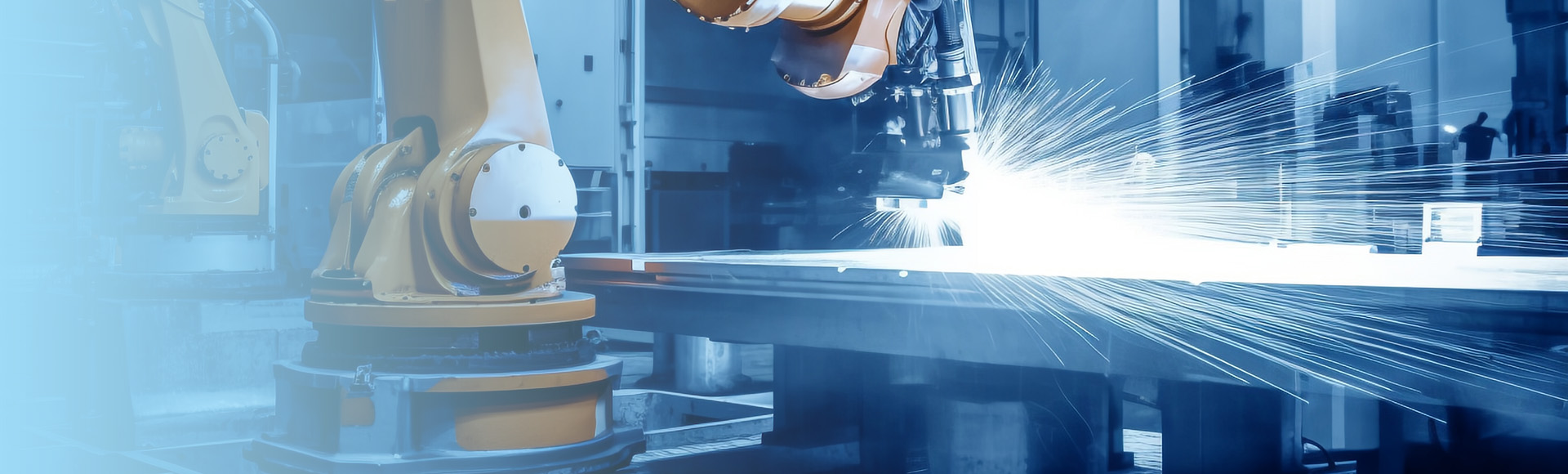
Does Laser Processing Equipment Affect Material Structure During Welding?
A common concern among manufacturers considering laser processing equipment is whether the intense heat from laser welding alters the base material’s microstructure—and if so, whether that matters for performance.
Minimal Heat Input, Smaller Affected Zone
Compared to arc or resistance welding, laser welding delivers energy in a highly concentrated spot over a very short time. This results in a narrow heat-affected zone (HAZ)—often just fractions of a millimeter wide. In materials like stainless steel, aluminum, or titanium, this means less grain growth, reduced phase changes, and lower residual stress. For precision components or thin-walled parts, that translates to less distortion and better dimensional stability.
When Microstructural Changes Do Occur
In some cases, localized heating can still affect material properties. For example:
In age-hardened aluminum alloys (like 6061-T6), the HAZ may lose some strength due to precipitate dissolution.
In certain high-strength steels, rapid cooling after laser welding can form martensite, increasing hardness but reducing toughness.
However, these effects are generally predictable and often manageable through parameter tuning—such as adjusting travel speed, using pre- or post-heat, or selecting pulsed modes to control cooling rates.
Practical Implications for Buyers
If your application demands strict mechanical or corrosion performance (e.g., medical implants, aerospace fittings), it’s wise to conduct metallurgical testing on welded samples before full-scale adoption. Most modern laser processing equipment allows fine control over thermal input, making it possible to minimize unwanted changes while maintaining weld integrity.
In short, yes, laser welding does affect the local material structure—but typically far less than conventional methods. With proper process design, that impact can be controlled to meet even demanding engineering requirements.
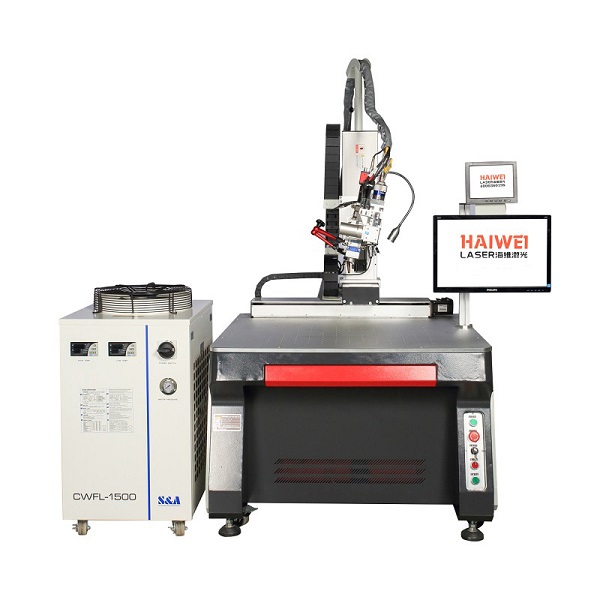
For applications where material integrity matters, Haiwei Laser’s systems offer precise thermal control and stable beam quality—helping maintain microstructure consistency in sensitive materials.
Recent Posts
- What are the advantages of laser welding machines in lithium battery pack production lines?
- What issues should be noted when choosing a lithium battery pack production line?
- Quality Inspection and Control of Lithium Battery Module Pack Production Line
- Cell grouping and sorting process in lithium battery module pack production line
- What are the safety hazards of lithium battery pack production lines and how can they be prevented?
INQUIRY