
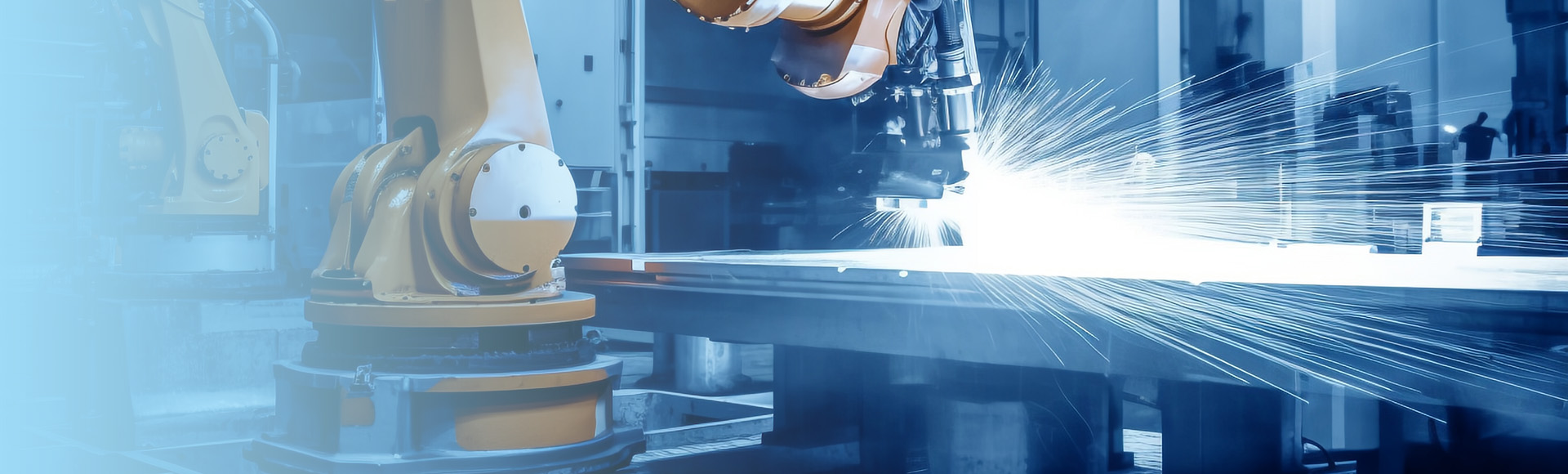
Can a Laser Welding Machine Weld Metal with High Impurity Content?
Many manufacturers wonder whether a laser welding machine can handle metals that contain oxides, coatings, oils, or other surface contaminants—common in recycled materials, cast parts, or poorly stored stock. The short answer is: it depends, but success requires more than just high power.
Why Impurities Challenge Laser Welding
Laser welding relies on consistent absorption of light energy by the base metal. Surface impurities like oil, rust, or oxide layers can scatter or reflect the beam, leading to unstable melt pools, porosity, or inconsistent penetration. In severe cases, trapped volatiles vaporize during welding and create blowholes or spatter.
Unlike arc processes that “burn through” some contamination, lasers deliver precise, localized heat—so they’re less forgiving of dirty surfaces.
Practical Approaches to Improve Results
Pre-cleaning helps significantly: Even light degreasing or abrasive brushing can improve weld consistency. For production lines, integrating an inline cleaning station (e.g., plasma or laser ablation) before welding often pays off in reduced scrap rates.
Adjust process parameters: Using a slightly defocused beam or lower power density can reduce spatter when welding mildly contaminated surfaces. Pulsed modes allow better control over melt pool dynamics, giving gases time to escape before solidification.
Choose the right wavelength: Fiber lasers (around 1070 nm) work well on clean steel or aluminum, but for highly reflective or oxidized materials, green or blue lasers (though less common) offer better initial absorption.
Realistic Expectations
A laser welding machine won’t magically weld heavily corroded or oil-soaked parts without preparation. However, with modest cleaning and proper parameter tuning, it can reliably join metals with minor surface impurities—especially compared to processes that generate more fumes or require flux.
For users working with recycled or as-cast metals, investing in basic surface prep often yields better ROI than pushing laser power to its limits. Clean input = consistent output.
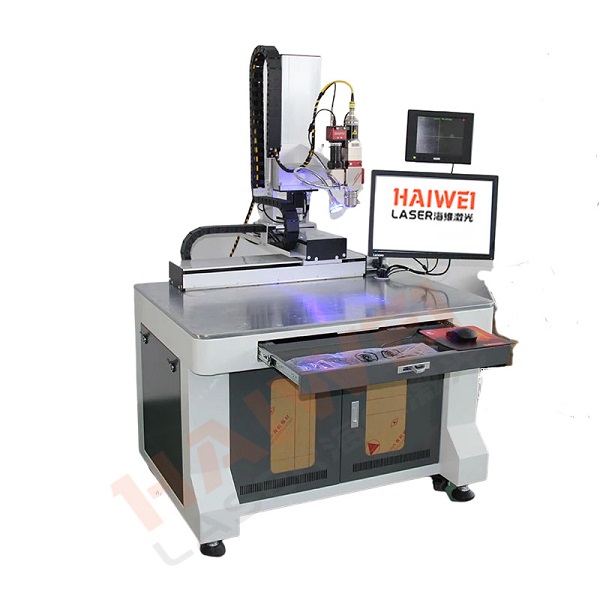
For reliable performance on challenging materials, Haiwei Laser’s systems offer stable beam control and adaptive welding parameters—ideal for real-world production needs.
Recent Posts
- What are the advantages of laser welding machines in lithium battery pack production lines?
- What issues should be noted when choosing a lithium battery pack production line?
- Quality Inspection and Control of Lithium Battery Module Pack Production Line
- Cell grouping and sorting process in lithium battery module pack production line
- What are the safety hazards of lithium battery pack production lines and how can they be prevented?
INQUIRY