
Can a Laser Welding Machine Handle Complex Parts?
Yes—modern laser welding machines are well suited for complex geometries, but success depends on how the system is configured, not just the laser itself.
Complexity Comes in Many Forms
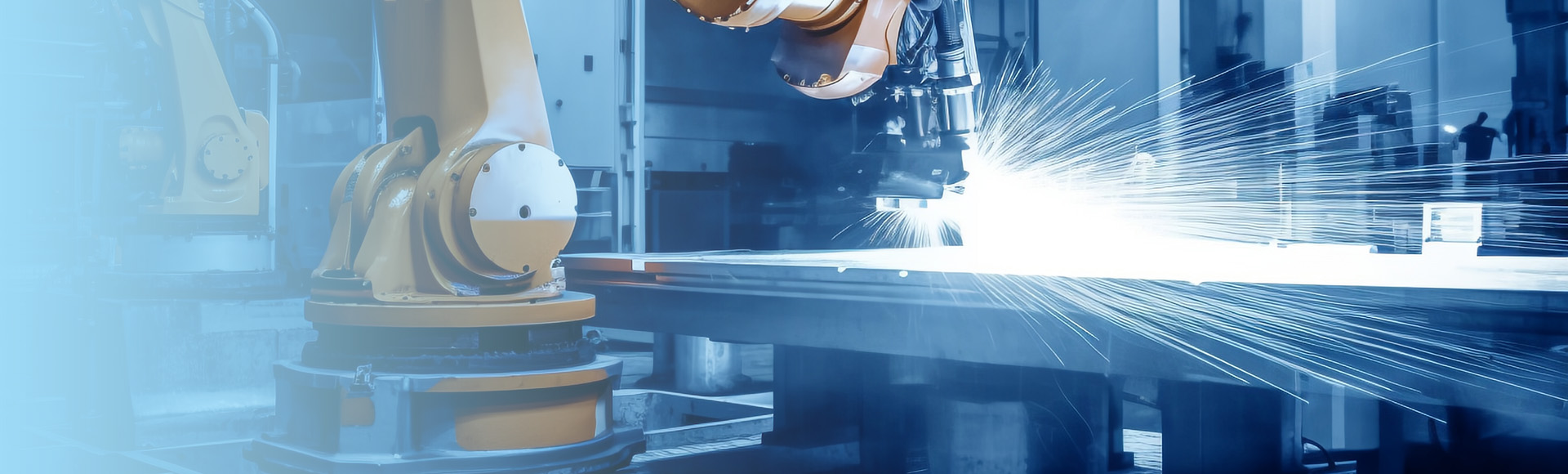
A “complex” part might have 3D contours, tight internal corners, varying wall thicknesses, or hard-to-reach joints. Traditional welding methods often struggle here due to torch access or heat distortion. A laser welding machine, by contrast, uses a focused beam that can be steered precisely via galvo scanners or robotic arms, reaching spots arc torches can’t.
Key Enablers for Complex Welds
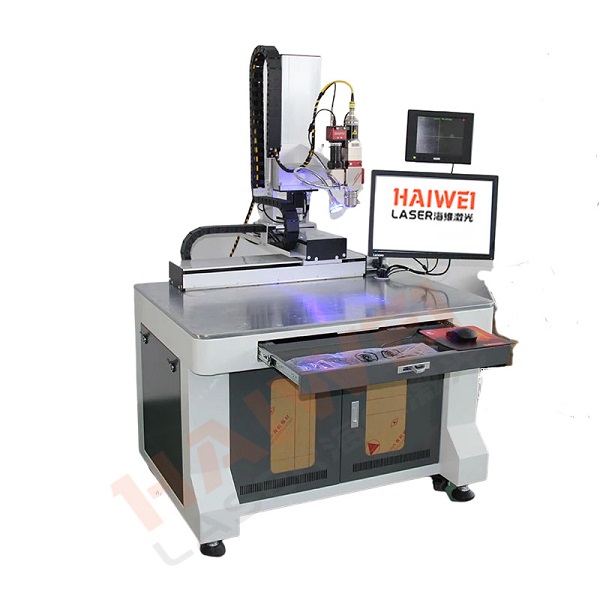
Multi-axis motion: 6-axis robots or precision XYZ stages allow the laser head to follow curved paths while maintaining optimal angle and focus.
Dynamic focus control: As the part surface moves up or down, an auto-focus system keeps the beam in the right plane—critical for stepped or tapered features.
Beam oscillation (wobble): By moving the beam in small patterns (circle, figure-8), you widen the weld pool, tolerate minor fit-up gaps, and improve wetting on corners or edges.
Vision-guided positioning: Cameras or laser line sensors can locate actual joint positions and adjust the path in real time, compensating for casting tolerances or assembly variation.
Real-World Examples
Battery busbars with multiple tabs at different heights, turbocharger housings with internal flanges, or medical implants with micro-features—all are routinely welded using properly equipped laser welding systems.
What Buyers Should Verify
Don’t assume all systems handle complexity equally. Ask:
Can the motion system reach all required weld seams without collisions?
Is focus tracking integrated, or is it fixed?
Does the software support 3D path programming and sensor feedback?
In short, a laser welding machine can absolutely weld complex parts—but only if it’s built with the right combination of motion flexibility, sensing, and beam control. The technology exists; the key is matching the system to your specific geometry.
For reliable welding of complex parts, Haiwei Laser’s systems combine precise multi-axis motion, real-time focus tracking, and intelligent beam control—proven in demanding applications from automotive to medical device manufacturing.
Recent Posts
- What are the advantages of laser welding machines in lithium battery pack production lines?
- What issues should be noted when choosing a lithium battery pack production line?
- Quality Inspection and Control of Lithium Battery Module Pack Production Line
- Cell grouping and sorting process in lithium battery module pack production line
- What are the safety hazards of lithium battery pack production lines and how can they be prevented?
INQUIRY