
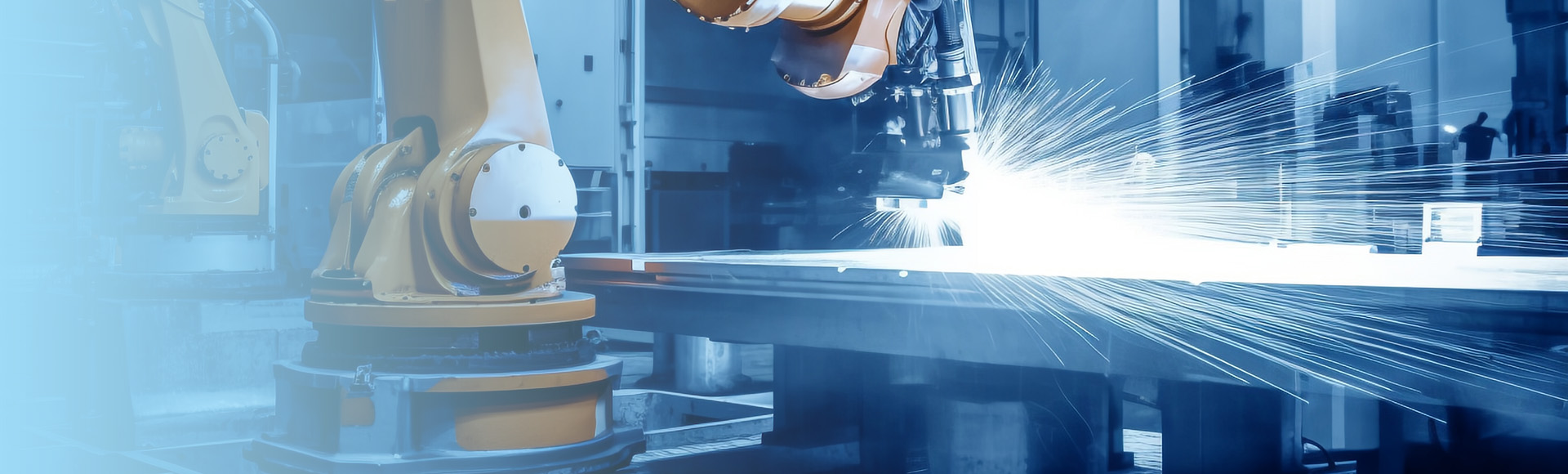
Can a Laser Welding Machine Efficiently Weld Honeycomb Structures?
Honeycomb materials—often made of aluminum, stainless steel, or titanium—are widely used in aerospace, automotive, and energy applications for their high strength-to-weight ratio. But their complex geometry raises a practical question: can a laser welding machine handle them effectively?
Challenges Posed by the Structure
The main issue isn’t the material itself, but the geometry. A honeycomb core consists of thin walls forming hexagonal cells with large open spaces. During welding, heat can dissipate unevenly, and molten metal may sag into voids or fail to wet adjacent walls properly. Traditional arc methods often cause excessive melt-through or distortion.
How Laser Welding Addresses These Issues
A laser welding machine, particularly one using pulsed fiber lasers, offers precise control over heat input. By tuning pulse duration, peak power, and frequency, operators can melt just enough material to form a strong joint without collapsing cell walls. The small spot size (often <0.3 mm) allows targeting specific struts or edges while avoiding nearby unsupported areas.
For joining honeycomb panels to face sheets (e.g., in sandwich panels), continuous-wave lasers with seam-tracking systems can maintain consistent penetration along the bond line—even if minor gaps exist due to manufacturing tolerances.
Practical Considerations
Success depends on fixturing and process design. Proper backing or internal support may be needed during welding to prevent deformation. Inert gas shielding must be well-directed to protect the weld zone, especially in reactive metals like titanium.
Also, not all laser welding machines are equally suited. Systems with real-time power modulation and integrated vision guidance tend to perform better on complex geometries than basic benchtop units.
Yes, laser welding can be effective for honeycomb structures—but only when matched with the right parameters, tooling, and machine capabilities. For manufacturers evaluating this approach, conducting sample trials with actual parts is essential to validate feasibility before full-scale adoption.
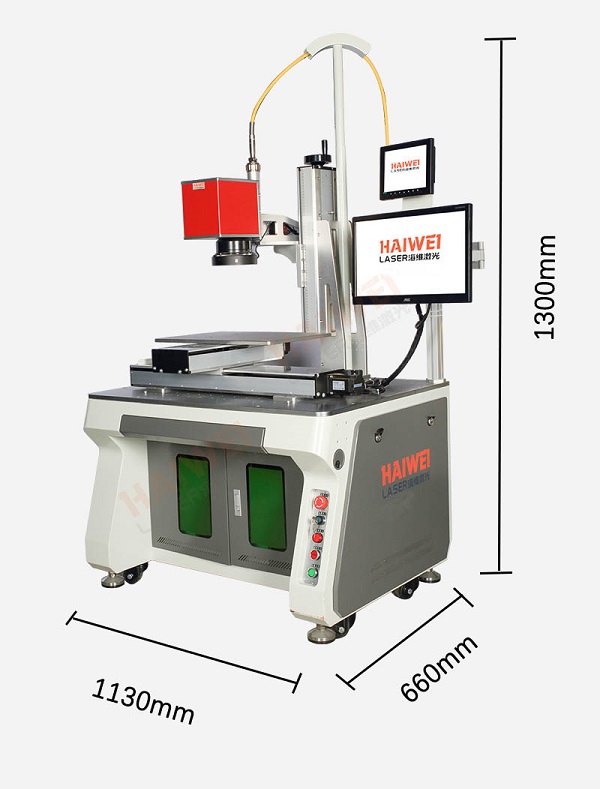
For reliable results on complex geometries like honeycomb structures, consider Haiwei Laser’s systems—they combine precise pulse control, stable beam delivery, and user-friendly process setup, making them a practical choice for demanding welding tasks.
Recent Posts
- What are the advantages of laser welding machines in lithium battery pack production lines?
- What issues should be noted when choosing a lithium battery pack production line?
- Quality Inspection and Control of Lithium Battery Module Pack Production Line
- Cell grouping and sorting process in lithium battery module pack production line
- What are the safety hazards of lithium battery pack production lines and how can they be prevented?
INQUIRY