
Does the Exterior Design of a Laser Welding Machine Matter?
When evaluating a laser welding machine for industrial use, most buyers focus on core specs: laser power, control accuracy, repeatability, and integration capability. But what about its physical appearance? Is it just cosmetic—or does it reflect something deeper?
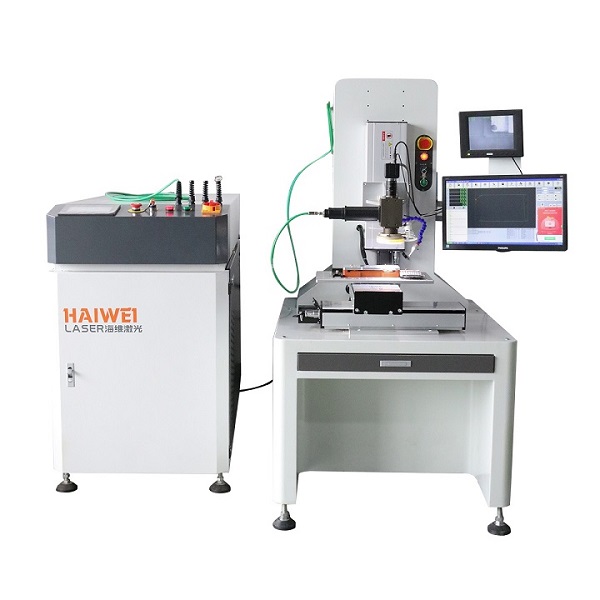
In practice, the exterior design of a laser welding machine often signals engineering priorities. A clean, modular enclosure usually means better thermal management, easier access for maintenance, and thoughtful cable routing—all of which reduce downtime. Conversely, a cluttered or poorly sealed housing may hint at rushed development or cost-cutting in non-visible areas.
Safety is another key factor. Machines with integrated light-tight enclosures, clearly marked emergency stops, and standardized safety interlocks aren’t just “neater”—they comply more reliably with ISO 13849 or ANSI Z136 standards. That matters during audits or when scaling production across regions.
Ergonomics also ties into form. If operators need to load parts frequently, a well-placed door, intuitive HMI panel, or low loading height—elements shaped by industrial design—can reduce fatigue and errors over long shifts.
That said, aesthetics alone don’t weld better. A sleek-looking unit with weak motion control or poor beam quality won’t deliver consistent results. The goal isn’t beauty—it’s functional coherence.
So when comparing laser welding machines, look beyond paint and panels. Ask:
Can I reach filters or lenses without tools?
Are service points labeled?
Does the layout support my workflow?
A thoughtfully designed exterior often mirrors a system built for real-world reliability—not just showroom appeal. In the end, form follows function, especially in precision manufacturing.
Recent Posts
- What are the advantages of laser welding machines in lithium battery pack production lines?
- What issues should be noted when choosing a lithium battery pack production line?
- Quality Inspection and Control of Lithium Battery Module Pack Production Line
- Cell grouping and sorting process in lithium battery module pack production line
- What are the safety hazards of lithium battery pack production lines and how can they be prevented?
INQUIRY