
Fully Automatic Laser Welding Machine: Safe and Efficient Welding in Practice
When manufacturers consider a fully automatic laser welding machine, two concerns often come up: “Is it truly safe for operators?” and “Does automation really improve efficiency—or just add complexity?” The answer lies in how modern systems integrate safety and process control.
Built-in Safety Reduces Risk
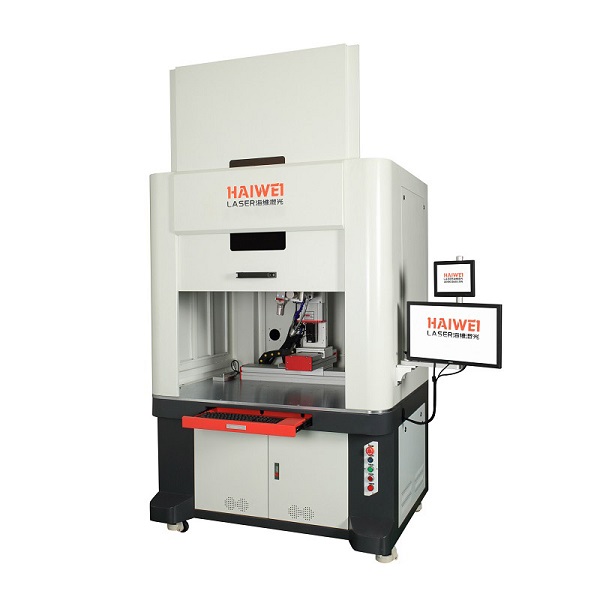
Unlike manual laser welding, a fully automatic laser welding machine typically operates inside an enclosed workstation with interlocked doors, light curtains, or safety scanners. The laser only fires when the cell is sealed and sensors confirm no personnel are present. This eliminates direct exposure to beam radiation or intense arc glare—common hazards in handheld setups.
Additionally, fume extraction is usually integrated directly at the weld point, pulling metal vapors away before they reach breathing zones. That’s a clear advantage over open-arc methods.
Efficiency Comes from Consistency, Not Just Speed
Automation doesn’t just make welding faster—it makes it repeatable. Once programmed, the system runs the same path, power, and speed every cycle. There’s no fatigue, no variation between shifts, and fewer rejected parts. For high-mix shops, switching jobs often takes minutes via software, not hours of retooling.
Moreover, many systems log key parameters (power, focus position, seam tracking data), enabling traceability—critical in automotive or medical manufacturing.
One Caveat
Safety and efficiency depend on proper setup. A poorly guarded cell or unclear operating procedure can undermine both. Always verify that the machine complies with local standards (like ANSI Z136.1 in the U.S. or EN 60825 in Europe) and includes clear operator training.
A well-designed fully automatic laser welding machine isn’t just a productivity tool—it’s a step toward more predictable quality and a safer shop floor. But its benefits only materialize when safety and process engineering go hand in hand. Test it with your real parts, and involve your team early in the workflow design.
Recent Posts
- What are the advantages of laser welding machines in lithium battery pack production lines?
- What issues should be noted when choosing a lithium battery pack production line?
- Quality Inspection and Control of Lithium Battery Module Pack Production Line
- Cell grouping and sorting process in lithium battery module pack production line
- What are the safety hazards of lithium battery pack production lines and how can they be prevented?
INQUIRY