

Laser Welding Machine: Solving Efficiency Challenges in Electronics Packaging
In electronics manufacturing—especially for sensors, power modules, battery packs, and medical implants—hermetic sealing and fine-feature joining are critical. Traditional methods like resistance spot welding or soldering often struggle with speed, thermal damage, or flux residues. A laser welding machine offers a cleaner, faster alternative, but only when applied correctly.
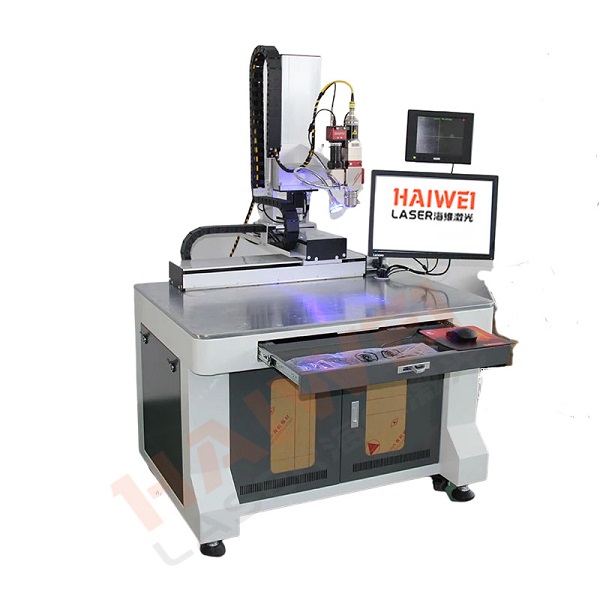
Why Laser Works Well for Electronics
Laser welding delivers precise energy to small areas (spot sizes down to 20–50 µm), minimizing heat spread to nearby components. This is crucial when welding thin housings (0.1–0.3 mm) around temperature-sensitive ICs or batteries. Unlike soldering, it requires no consumables and leaves no residue—ideal for cleanroom environments.
Boosting Throughput Without Sacrificing Quality
Modern laser welding machines integrate high-speed galvo scanners or precision stages that move between weld points in milliseconds. For example, a sensor cap with 8 seam welds can be sealed in under 5 seconds using a pulsed fiber laser, compared to 15–20 seconds with manual TIG.
Key enablers of efficiency:
Pre-programmed recipes for common materials (e.g., Kovar, stainless steel, copper alloys)
Vision alignment to compensate for part placement variation
Real-time monitoring to catch missed welds early
Important Considerations
Not all electronics packages are laser-weldable. Joint design matters: tight fit-up (<0.05 mm gap) and compatible material pairs (e.g., same metal or laser-transmissive combinations) are essential. Also, reflective metals like copper require green or blue lasers—or special surface treatments—to improve absorption at 1 µm wavelength.
When evaluating a laser welding machine for electronics, run a production-like test: load your actual parts, cycle through a batch of 50+, and check both weld integrity (via helium leak test or cross-section) and cycle time. The best system isn’t the fastest in demo mode—it’s the one that delivers consistent, qualified welds in your real workflow.
Recent Posts
- What are the advantages of laser welding machines in lithium battery pack production lines?
- What issues should be noted when choosing a lithium battery pack production line?
- Quality Inspection and Control of Lithium Battery Module Pack Production Line
- Cell grouping and sorting process in lithium battery module pack production line
- What are the safety hazards of lithium battery pack production lines and how can they be prevented?
INQUIRY