

How Accurate Can a Laser Cutting Machine Really Be?
When evaluating a laser cutting machine, many buyers ask, “What’s the cutting accuracy?” The short answer: it depends. While specs often quote ±0.1 mm or better, real-world precision is influenced by more than just the laser itself.
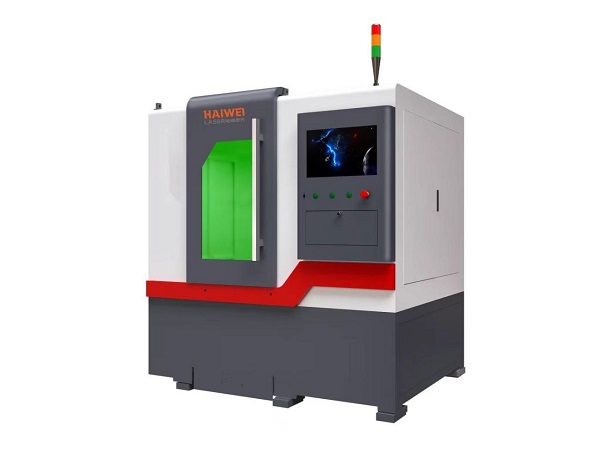
It’s Not Just About the Laser
Cutting accuracy relies on the entire system—motion mechanics, control software, material handling, and even shop floor conditions. A high-quality fiber laser with excellent beam quality (low M²) can focus to a tiny spot, but if the gantry flexes under acceleration or the linear guides wear over time, actual cut dimensions will drift.
For thin metals (1–3 mm stainless steel), well-maintained laser cutting machines commonly achieve ±0.05 to ±0.1 mm positional accuracy. On thicker materials (>10 mm), kerf taper and heat effects become dominant, and dimensional tolerance may widen to ±0.2 mm or more—even with perfect setup.
Key Factors That Affect Real-World Accuracy
Material flatness: Warped sheets cause focus shift, leading to inconsistent edge quality.
Nozzle condition and alignment: A worn or misaligned nozzle disrupts assist gas flow, affecting cut squareness.
Thermal expansion: During long runs, the machine frame heats up, potentially shifting calibration. High-end systems use thermal compensation algorithms to counter this.
Software path control: Smooth motion interpolation reduces corner rounding and overshoot.
What Buyers Should Do
Don’t rely solely on datasheet numbers. Request a cutting test using your typical material type, thickness, and part geometry. Measure critical features—not just edges—and check consistency across the full sheet. Also ask about recalibration frequency and whether the system logs thermal or mechanical drift data.
In practice, repeatability often matters more than absolute accuracy. A laser cutting machine that consistently cuts within ±0.08 mm day after day is more valuable than one that hits ±0.03 mm once but varies widely thereafter.
Choose based on real performance under your conditions—not just best-case lab results.
Recent Posts
- What are the advantages of laser welding machines in lithium battery pack production lines?
- What issues should be noted when choosing a lithium battery pack production line?
- Quality Inspection and Control of Lithium Battery Module Pack Production Line
- Cell grouping and sorting process in lithium battery module pack production line
- What are the safety hazards of lithium battery pack production lines and how can they be prevented?
INQUIRY