
Handheld Laser Welding Machine: Flexible Welding in Tight Spaces
In many fabrication and repair scenarios, access to the weld joint is limited—think inside cabinets, behind panels, or within complex assemblies. This is where a handheld laser welding machine offers real practical value. Unlike fixed automation systems, it gives operators the freedom to reach difficult areas without disassembling entire structures.
Why It Works in Confined Areas
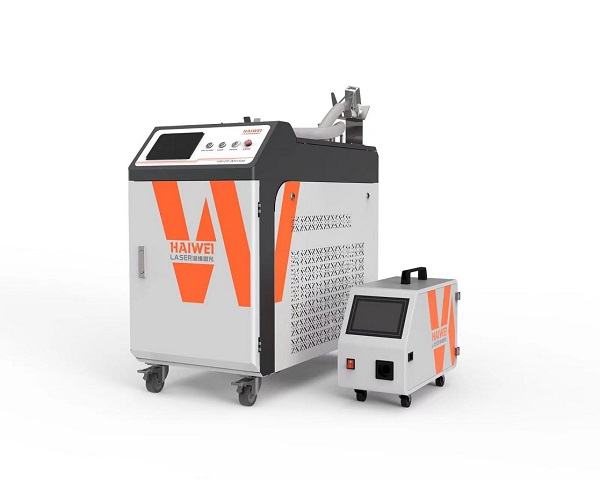
The core advantage of a handheld laser welding machine lies in its compact welding torch and flexible fiber delivery. Most units use a 5–10 meter fiber cable, allowing the main laser source to stay outside the workspace while the lightweight handpiece (often under 1 kg) is maneuvered precisely into tight corners. Combined with coaxial red-light guidance, users can accurately position the laser spot even in low-visibility zones.
Material and Thickness Considerations
These systems typically use pulsed fiber lasers in the 1000W–3000W range, well-suited for stainless steel, carbon steel, and some coated metals up to 3 mm thick. While they’re not designed for heavy structural welding, they excel at sealing seams, repairing thin housings, or joining brackets where minimal heat input is critical. For highly reflective materials like copper or aluminum, success depends on surface preparation and proper parameter tuning—not all handheld units handle these equally well.
Safety and Practical Use
Because the laser is Class 4, proper eyewear matched to the wavelength (usually 1080 nm) is essential. Many users overlook fume extraction; even small welds generate metal particulates, so a portable extractor is recommended, especially in enclosed spaces.
Ideal Applications
On-site repair of machinery frames
Welding HVAC duct joints in ceilings or walls
Sealing electronic enclosures without distortion
Custom metal art or furniture assembly
In short, a handheld laser welding machine isn’t meant to replace robotic cells—but when you need clean, precise welds where robots can’t reach, it’s a genuinely useful tool. Just make sure your application matches its capabilities.
Recent Posts
- What are the advantages of laser welding machines in lithium battery pack production lines?
- What issues should be noted when choosing a lithium battery pack production line?
- Quality Inspection and Control of Lithium Battery Module Pack Production Line
- Cell grouping and sorting process in lithium battery module pack production line
- What are the safety hazards of lithium battery pack production lines and how can they be prevented?
INQUIRY