
Why Is the Laser Welding Machine So Stable During Operation?
When users adopt a laser welding machine, one of the most consistent observations is how stable the process feels—run after run, shift after shift. This isn’t luck; it’s the result of several engineering factors working together.
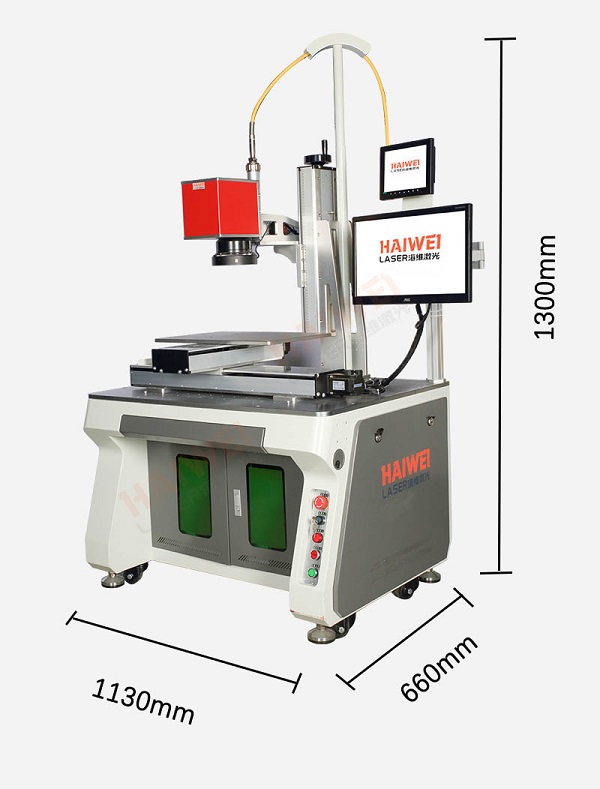
Non-Contact Process with No Wear Parts
Unlike MIG or TIG welding, laser welding machines don’t use consumable electrodes or physical contact tips. There’s no electrode degradation, no wire feed variation, and no risk of short circuits. The beam is delivered through a fiber or optical path, which—when properly maintained—remains consistent over thousands of operating hours.
Precise Energy Control
Modern laser welding machines allow fine adjustment of power, pulse duration, frequency, and waveform shape. Even at low power levels (e.g., 100W for thin foils), the output remains stable because the laser diode pump source and control electronics are tightly regulated. Many systems also include real-time power monitoring that compensates for minor fluctuations automatically.
Integrated Motion and Focus Control
Stability isn’t just about the laser—it’s about where and how the energy is delivered. High-quality machines pair the laser source with precision motion stages (or robots) that repeat paths within ±0.02 mm. Combined with fixed or dynamic focus optics, this ensures the beam spot size and intensity stay constant along the entire weld seam.
Environmental Isolation Helps Too
Most industrial laser welding machines operate in enclosed work cells with controlled airflow and fume extraction. This minimizes disturbances from drafts, dust, or ambient light that could otherwise affect beam delivery or sensor readings.
In practice, this stability translates to fewer rejects, less rework, and more predictable cycle times—especially important in industries like medical device or battery manufacturing where consistency is non-negotiable.
So, the high stability of laser welding machines comes from a combination of solid-state design, digital control, and system integration—not just raw power. For buyers, it means reliability you can count on, as long as basic maintenance (like cleaning protective windows) is followed.
Recent Posts
- What are the advantages of laser welding machines in lithium battery pack production lines?
- What issues should be noted when choosing a lithium battery pack production line?
- Quality Inspection and Control of Lithium Battery Module Pack Production Line
- Cell grouping and sorting process in lithium battery module pack production line
- What are the safety hazards of lithium battery pack production lines and how can they be prevented?
INQUIRY