

Laser Equipment: Automated Seam Tracking and Correction in Welding
When integrating laser equipment into high-mix or high-precision production, one common challenge is part variation. Even with good fixturing, stamped or cast components can have slight dimensional differences—enough to cause misaligned welds if the laser follows a fixed path. That’s where automated seam tracking and real-time correction become essential.
How It Works in Practice
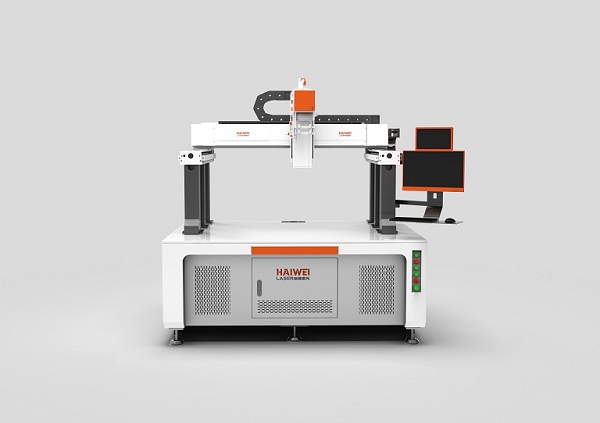
Modern laser equipment often pairs a laser vision sensor (like a structured-light scanner) with the welding head. Before or during welding, the sensor scans the joint and detects the actual seam position. If the part is shifted by even 0.2 mm, the system instantly adjusts the laser beam’s trajectory via galvo mirrors or robot interpolation—keeping the weld precisely on target without stopping the cycle.
Why It Matters for Quality and Yield
Without tracking, minor fit-up gaps or assembly tolerances lead to incomplete fusion, undercut, or spatter. In automotive battery trays or medical enclosures, such defects mean scrap or rework. With real-time correction, first-pass yield improves significantly, especially when processing parts from multiple suppliers or after extended tool wear.
Not All Systems Are Equal
Some entry-level setups only offer pre-weld scanning with no in-process adjustment. True closed-loop tracking updates position during welding, which is critical for long seams or thermally expanding materials. Ask vendors: Is the tracking integrated into the motion controller? What’s the update rate? Can it handle reflective surfaces like copper or aluminum?
A Smart Investment for Flexible Production
Automated seam tracking reduces reliance on ultra-precise (and expensive) tooling. It also makes your laser equipment more adaptable to design changes or new part families—without reprogramming every path from scratch.
In short, if your parts aren’t perfectly consistent—and most aren’t—then seam tracking isn’t a luxury. It’s a practical way to ensure your laser equipment delivers reliable, repeatable welds, shift after shift.
Recent Posts
- What are the advantages of laser welding machines in lithium battery pack production lines?
- What issues should be noted when choosing a lithium battery pack production line?
- Quality Inspection and Control of Lithium Battery Module Pack Production Line
- Cell grouping and sorting process in lithium battery module pack production line
- What are the safety hazards of lithium battery pack production lines and how can they be prevented?
INQUIRY