
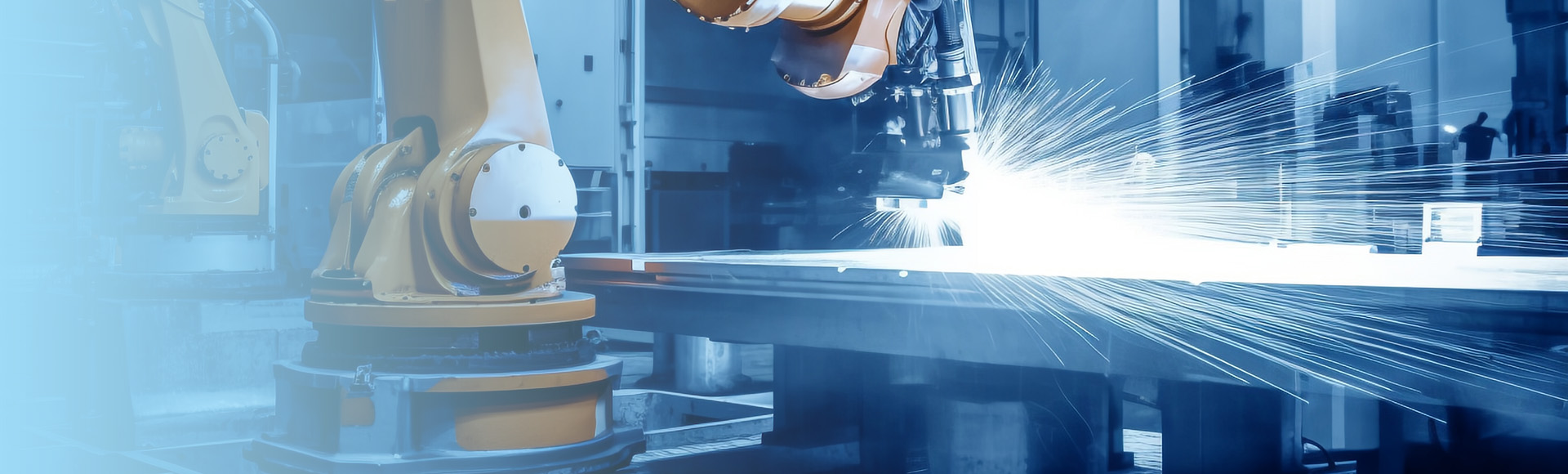
Laser Welding Robot: How Intelligent Control Enables Energy Savings and Emission Reduction
As manufacturers face growing pressure to reduce energy use and carbon footprint, the laser welding robot has emerged as a practical solution—not just for precision, but for sustainability. Unlike traditional arc welding, which consumes high power continuously, a modern laser welding robot uses intelligent control to minimize waste at every stage.
Precise Energy Delivery = Less Waste
The core advantage lies in how laser energy is applied. A laser welding robot only activates the laser when needed—during actual welding—and delivers energy precisely to the joint. There’s no standby arc, no excessive heat input, and minimal spatter. For example, welding a steel bracket with a 2 kW fiber laser typically uses 30–40% less energy than MIG welding the same part, according to real-world factory data.
Smart Features That Cut Consumption
Modern systems include several intelligent functions that further reduce resource use:
Adaptive power control: Laser output adjusts in real time based on joint gap or material reflectivity, avoiding over-welding.
Standby mode management: When idle, the system automatically reduces chiller and pump power.
Integrated fume extraction: Only runs when welding occurs, cutting fan energy by up to 50%.
Process monitoring: Prevents defective welds that would require rework—and additional energy.
Lower Emissions Beyond Electricity
Because laser welding produces little to no slag, smoke, or consumables (like welding wire or shielding gas in large volumes), it also reduces indirect emissions from material production and waste handling. In automotive battery tray production, switching from TIG to a laser welding robot cut shielding gas consumption by over 70%.
What Buyers Should Look For
When evaluating a laser welding robot, ask for:
Hourly energy consumption data under your cycle conditions;
Whether the control system supports eco-modes;
Compatibility with regenerative chillers or energy recovery options.
In short, intelligent control turns the laser welding robot into more than a productivity tool—it becomes a measurable asset in your sustainability strategy. The savings aren’t just on the power bill; they’re in cleaner air, less waste, and lower total cost of ownership.
Recent Posts
- What are the advantages of laser welding machines in lithium battery pack production lines?
- What issues should be noted when choosing a lithium battery pack production line?
- Quality Inspection and Control of Lithium Battery Module Pack Production Line
- Cell grouping and sorting process in lithium battery module pack production line
- What are the safety hazards of lithium battery pack production lines and how can they be prevented?
INQUIRY