

Laser Equipment: Meeting Production Requirements for Precise Weld Seam Width
In industries like medical device manufacturing, electronics, and precision sensors, consistent weld seam width—often between 0.2 mm and 1.0 mm—is not just a cosmetic requirement; it directly affects structural integrity, hermeticity, and downstream assembly. Many buyers turn to laser equipment for this task, but achieving repeatable seam width requires more than just a focused beam.
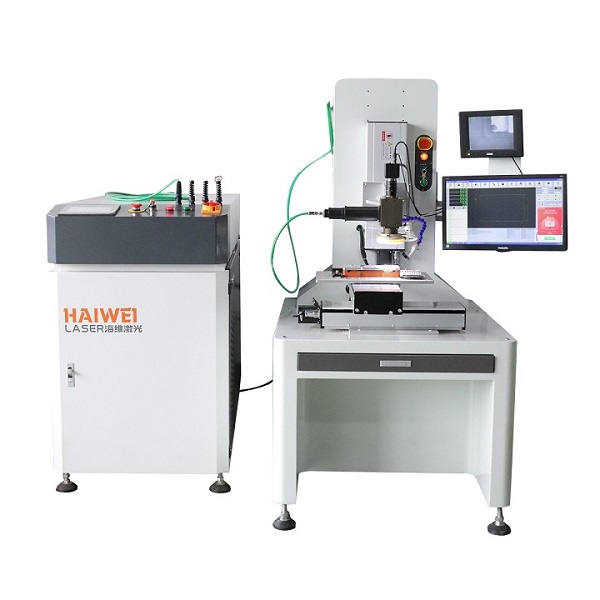
Control Starts with Beam Focus and Power Stability
The width of a laser weld is primarily determined by spot size, power density, and travel speed. A high-quality laser equipment system uses a stable fiber laser source (with low power ripple) and a precision focusing head to maintain a consistent spot diameter—typically 0.2–0.4 mm for fine welding. Even minor fluctuations in focal position or laser output can widen the seam or create irregular edges.
Process Parameters Must Be Tuned Together
Simply reducing power doesn’t guarantee a narrower seam. If speed is too slow, heat accumulates and the melt pool spreads. The key is balancing power, speed, and defocus distance. For example, slightly positive defocus (beam focused just above the surface) can produce a wider but shallower bead—useful for lap joints—while negative defocus yields a narrower, deeper penetration. Modern laser equipment allows these parameters to be programmed per weld segment, enabling consistent seam width even on complex paths.
Motion Accuracy Matters Just as Much
A precise optical system is wasted if the motion platform lacks repeatability. Linear stages with high-resolution encoders and rigid mechanics ensure the laser follows the intended path without jitter or drift—critical when welding long seams or arrays of micro-joints.
Practical Tip for Buyers
Ask suppliers to demonstrate seam width consistency over 20+ consecutive welds on your material. Request cross-section photos and width measurements—not just visual inspection. True precision shows up in data, not just appearance.
In short, meeting tight seam width specs with laser equipment depends on optical quality, parameter control, and mechanical stability working together. Always validate with real-world testing before committing.
Recent Posts
- What are the advantages of laser welding machines in lithium battery pack production lines?
- What issues should be noted when choosing a lithium battery pack production line?
- Quality Inspection and Control of Lithium Battery Module Pack Production Line
- Cell grouping and sorting process in lithium battery module pack production line
- What are the safety hazards of lithium battery pack production lines and how can they be prevented?
INQUIRY