
How Cooling Systems Affect the Performance and Lifespan of Laser Equipment
When evaluating laser equipment for industrial use, buyers often focus on laser power, beam quality, or automation features—but overlook a critical supporting component: the cooling system. In reality, the performance stability and long-term reliability of laser equipment are closely tied to how effectively heat is managed during operation.
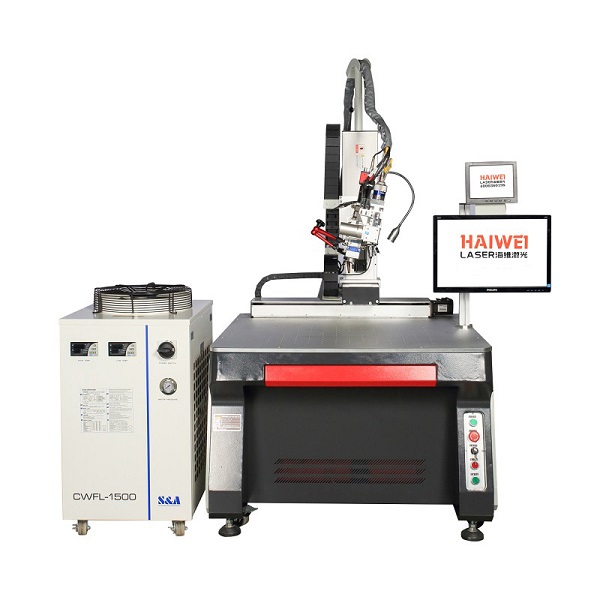
Most industrial lasers—whether fiber, disk, or CO₂—convert only 30–50% of electrical input into usable laser light. The rest becomes waste heat. Without precise thermal control, key components like pump diodes, gain media, and optical mounts can experience thermal drift, wavelength shift, or accelerated degradation.
A well-designed cooling system maintains the laser source within its optimal temperature window (typically ±0.5°C for high-precision applications). This ensures consistent output power and beam parameters over time. Conversely, inadequate cooling can lead to mode instability, reduced wall-plug efficiency, and even unexpected shutdowns.
Moreover, thermal cycling from poor temperature regulation contributes to mechanical stress in optical assemblies, shortening component life. For example, repeated expansion and contraction of fiber connectors or collimators may cause misalignment that’s difficult to diagnose but degrades weld quality.
There are two common approaches:
Closed-loop chillers with dual circuits (one for the laser head, one for the power supply) offer better stability for high-duty-cycle applications.
Air-cooled units are simpler and lower-cost but are generally limited to low-to-mid power systems (<1 kW) and stable ambient environments.
When purchasing laser equipment, ask suppliers for coolant flow specs, temperature stability data, and maintenance intervals. Also verify whether the chiller is integrated or requires separate installation—this affects footprint, noise, and service access.
In short, the cooling system isn’t just an accessory—it’s a core enabler of consistent performance and extended service life for your laser equipment. Investing in proper thermal management pays off in uptime, process repeatability, and total cost of ownership.
Recent Posts
- What are the advantages of laser welding machines in lithium battery pack production lines?
- What issues should be noted when choosing a lithium battery pack production line?
- Quality Inspection and Control of Lithium Battery Module Pack Production Line
- Cell grouping and sorting process in lithium battery module pack production line
- What are the safety hazards of lithium battery pack production lines and how can they be prevented?
INQUIRY