
Is a Galvanometer Laser Welding Machine the Right Choice for Your Application?
When manufacturers need fast, precise, and repeatable welding on small to medium-sized components, the galvanometer laser welding machine often comes up as a top option. But while it offers clear benefits in specific scenarios, it’s not universally suitable for every welding task. Understanding its capabilities—and limitations—is key to making an informed purchasing decision.
Speed and Precision for High-Volume Tasks
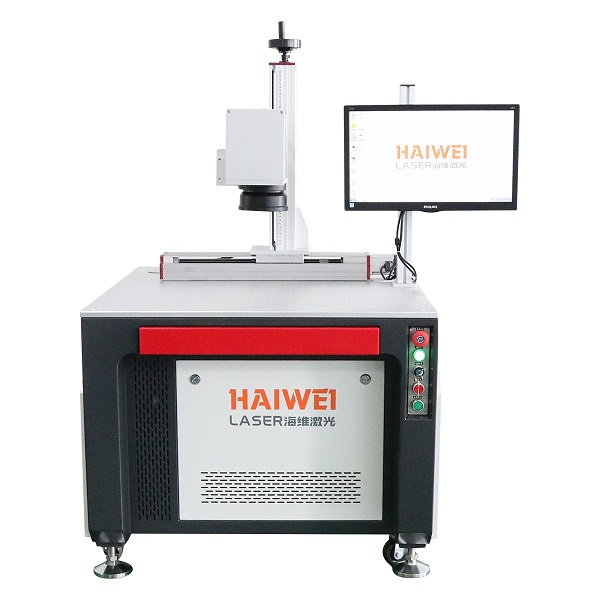
A galvanometer laser welding machine uses two high-speed rotating mirrors (galvanometers) to deflect the laser beam across the workpiece without moving the part or the laser source. This enables near-instantaneous beam positioning and continuous welding speeds of 100–300 mm/s. It’s especially effective for applications like battery tab welding, sensor hermetic sealing, electronic housing assembly, and medical device fabrication—where minimal heat input and micron-level accuracy matter.
Because there are no heavy mechanical axes involved, cycle times are significantly shorter than with robotic or gantry-based systems, and maintenance requirements are generally lower.
Important Constraints to Keep in Mind
The trade-offs lie in working area and depth of field. Most galvanometer laser welding machines operate within a flat focal plane ranging from 100×100 mm to 300×300 mm. Parts that are large, three-dimensional, or have surface height variations beyond ±1 mm may fall out of focus, leading to inconsistent weld penetration or weak joints.
Moreover, since the part remains stationary during welding, fixturing must be highly repeatable. Any misalignment or warpage can directly affect weld quality, as the system assumes a consistent part position relative to the focal plane.
If your production involves thin materials (typically under 2 mm), flat or gently contoured geometries, and high throughput demands, a galvanometer laser welding machine can be a strong fit. However, always conduct real-part trials to confirm performance under actual production conditions. The right choice isn’t about the most advanced technology—it’s about the best match for your specific process needs.
Recent Posts
- What are the advantages of laser welding machines in lithium battery pack production lines?
- What issues should be noted when choosing a lithium battery pack production line?
- Quality Inspection and Control of Lithium Battery Module Pack Production Line
- Cell grouping and sorting process in lithium battery module pack production line
- What are the safety hazards of lithium battery pack production lines and how can they be prevented?
INQUIRY